The break room, and shelves surrounding it, are filled with training videos, demo products, and customer service posters. These are the tools of the trade for a sports retailer trying to separate from the big box stores that dominate the landscape.
Hibbett Sports has made a name for itself by being the neighborhood store where “everybody knows your name.” Most people throughout the South are surprised to see their favorite little sports store now infiltrating the big cities.
The manager, or “head coach” as it’s known in the company, of the Alpharetta, Ga., store, Jonathon Richardson said, “Just the other day I had a customer say ‘I can’t believe you guys are in Atlanta. I was raised in a small town in South Georgia; Hibbett is where everybody in our town shopped. It was all we knew’. We hear that statement all of the time, and I mean all of the time.”
For many years the company established itself as the only sports shop in rural southern communities. With its corporate offices in Birmingham, Al., the company spread its stores initially across the deepest parts of the Deep South. The plains and sparsely populated areas of Mississippi, Alabama, and Georgia were the breeding ground in the 1990s. Soon, it was on to college and medium size towns like Valdosta, Auburn, and Oxford. By the early 2000’s, the suburbs of major cities like Atlanta were starting to see the trademark red and black logo. What once started as an airplane parts supplier in the 1940’s, has transformed into a mall based, 900 store corporation, in 26 states.
Hibbett Sports proclaims itself to be a high-end sports retailer; and following suit it offers the same products as its competitors. The most popular basketball and running shoes, from Air Jordan’s to Brooks, don its walls. The names of Nike, Reebok and Adidas cover the sales floor. Athletic equipment and supplies are plentiful as well.
So what separates this retailer from the more well-known national chains? Two aspects: its business model and customer service/training of the employees.
As previously mentioned, most locations of the business are found in malls, either traditional or strip mall. The corporation does advertise, but for the most part each store relies on a location with heavy amounts of foot traffic. It is the dad passing by the store, with his wife and/or kids; they depend on in the major cities. Obviously, in the small towns, they are usually the only game in town.
Staying predominately in strip malls, the business is able to limit the overhead of purchasing land, owning a space, or maintaining certain operations. The major cost is that of a renting tenant. This is a model that is certainly not unusual in this modern era of retail oversaturation. This approach allows for yet another way to save money.
When any neighboring business in the strip that Hibbett shares goes out of business, the head coaches are required to notify corporate immediately. Of course, the reason for this would be a chance at rent reduction.
Also, each store is strategically placed near a major retailer like Target or Wal-Mart, usually in the same strip. At present day the make-up of Hibbett Sports stores is 85-90 percent mall based. Incredibly, and unlike its counterparts, the business lists only one superstore on its ledger.
By now you are saying to yourself, “What else makes them so successful? Good business models and ideas fail all the time”. The best answer for the success, turned out to be the same answer from everyone interviewed.
Joe Wahnschaff, assistant coach at the Alpharetta store, said, “We really want to help people and build their trust. When people know that you are knowledgeable, and that you actually care about helping them, they feel they can trust us.”
Posted on the wall near the door from the sales floor to the offices, is a bevy of informational posters, one of which includes the common foot ailments of the typical person- everything from over-pronation to supination and fallen arches are covered.
“One of my bosses likes to joke that we get a minor degree in podiatry”, said Chris Efferth, an employee, known at the company as a team player. “We want to be the best of the best. Corporate has us watch videos and take tests as soon as we are hired. We barely touch the sales floor without testing first.”
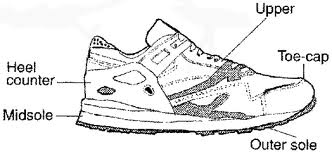
On this particular day the Alpharetta store is bringing on a new employee. She sits at the break table with a stack of instructional videos and a test booklet in front of her. The bottom half of a technical running shoe is next to a metal tin; and it is packed with tips on fitting a person for the correct technical, long-distance running shoe. This scene is representative of the responsibility Hibbett Sports feels for helping people and the place it holds in the market.
Later Richardson added, “I think our success is three-fold. It starts at corporate, with their communication and the revealing of technologies by vendors. Next, we hire the right people with the right mindset to actually care about the business and the customers. Finally, the training takes things to another level. Then our employees become our most important asset.”
Soon the sales floor on this Saturday afternoon is packed with a neighborhood baseball team stocking supplies before a game. The air is filled with the voices of overjoyed young boys visiting their favorite hangout. Before long the members of the staff break from the interview to attend to their customers.
“Good afternoon, Mrs. MacDonald” says Richardson.
She responds, “Hey Jonathon, can you help me find some tennis shoes for my son?”
Without even asking Richardson says, “Size 14 right?”
In modern day America relationships like this are a dying breed.
 Chris Mooneyham